
ARE YOU READY FOR THE BIMARU TAKEOVER

ARE YOU READY FOR THE BIMARU TAKEOVER?
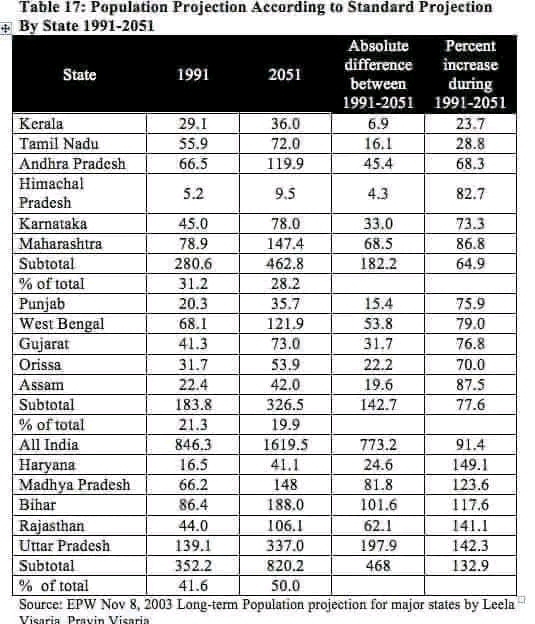
After delimitation the Hindi speaking states will have more MPs while the high performance states will be punished for doing well. Within the next 25 years India will be dominated by Hindi/Hindutva forces. The southern states have to take a call now. We know how the Hindutva belt treat their minorities. The southern leadership must wake up and oppose any more delimitation. 

By 2051 over 50% of India will be from UP, Bihar, MP, Rajasthan and Haryana., who together will add 468 million of the 773 .2 million additional number of Indians.
Kerala and Tamil Nadu would have grown by only 23.7% and 28.8% respectively, while India would have grown by 91.4%, and the BIMARU plus Haryana would have grown by 132.9%.
There are several issues implicit here. Internal migration will be a major social flashpoint. Look at the raging debate on "Bangladesh ghusbaitis". 

Are the economically faster growing states and demographically slowing down states going to remain immune to the "ghusbaiti" argument when most of the internal migrants are going to be from within?

2051 is just 30 years from now. Its time we get a handle on these issues and also get a more sensible sense of nationhood, rather than just using the "ghusbaiti" argument as a codeword to attack Muslims. 

Ghusbaiti is a two edged sword. Already the Shiv Sena wants restrictions on internal migrations to "protect" Maharashtrian interests and culture. And dont forget the two main parties in Tamil Nadu are derived from the secessionist Dravidian movement of Periyar.
The founding fathers wisely gave us a composite and inclusive sense of nationality. A nationality based on religion did not preserve Pakistan and will not preserve the truncated Pakistan. The newly independent India is meant to represent a bigger idea. Those who try to define it in the narrowest sense of religion and region will end up destroying it.

The destruction has begun.

Comments

Popular posts from this blog

Helen Mirren once said: Before you argue with someone, ask yourself.......

Helen Mirren once said: Before you argue with someone, ask yourself, is that person even mentally mature enough to grasp the concept of a different perspective. Because if not, there's absolutely no point. Not every argument is worth your energy. Sometimes, no matter how clearly you express yourself, the other person isn’t listening to understand—they’re listening to react. They’re stuck in their own perspective, unwilling to consider another viewpoint, and engaging with them only drains you. There’s a difference between a healthy discussion and a pointless debate. A conversation with someone who is open-minded, who values growth and understanding, can be enlightening—even if you don’t agree. But trying to reason with someone who refuses to see beyond their own beliefs? That’s like talking to a wall. No matter how much logic or truth you present, they will twist, deflect, or dismiss your words, not because you’re wrong, but because they’re unwilling to see another side. Maturity is...

The battle against caste: Phule and Periyar's indomitable legacy

In the annals of India's social reform, two luminaries stand preeminent: Jotirao Phule and E.V. Ramasamy, colloquially known as Periyar. Their endeavours, ensconced in the 19th and 20th centuries, continue to sculpt the contemporary struggle against the entrenched caste system. Phule's educational renaissance Phule, born in 1827, was an intellectual vanguard who perceived education as the ultimate equaliser. He inaugurated the inaugural school for girls from lower castes in Pune, subverting the Brahminical hegemony that had long monopolized erudition. His Satyashodhak Samaj endeavoured to obliterate caste hierarchies through radical social reform. His magnum opus, "Gulamgiri" (Slavery), delineated poignant parallels between India's caste system and the subjugation of African-Americans, igniting a discourse on caste as an apparatus of servitude. Periyar's rationalist odyssey Periyar, born in 1879, assumed the mantle of social reform through the Dravidian moveme...

India needs a Second National Capital

Metta Ramarao, IRS (VRS) India needs a Second National Capital till a green field New National Capital is built in the geographical centre of India. Dr B R Ambedkar in his book "Thoughts on Linguistic States" published in 1955 has written a full Chaper on "Second Capital for India" While discussing at length justfying the need to go for a second capital has clearly preferred Hyderabad over Kolkata and Mumbai. He did not consider Nagpur. Main reason he brought out in his book is the need to bridge north and south of the country. He recommended Hyderabad as second capital of India. Why we should consider Dr Ambedkar's recommendation: Delhi was central to British India. After partition, Delhi is situated at one corner of India. People from South find it daunting to visit due to distance, weather, language, culture, etc. If Hyderabad is made second capital, it will embrace all southern states. People of South India can come for work easily. Further, if Supreme Court...