Dr. Pushpa Mittra Bhargava : Defending a Pluralistic, Secular, and Democratic India is a Scientific Duty
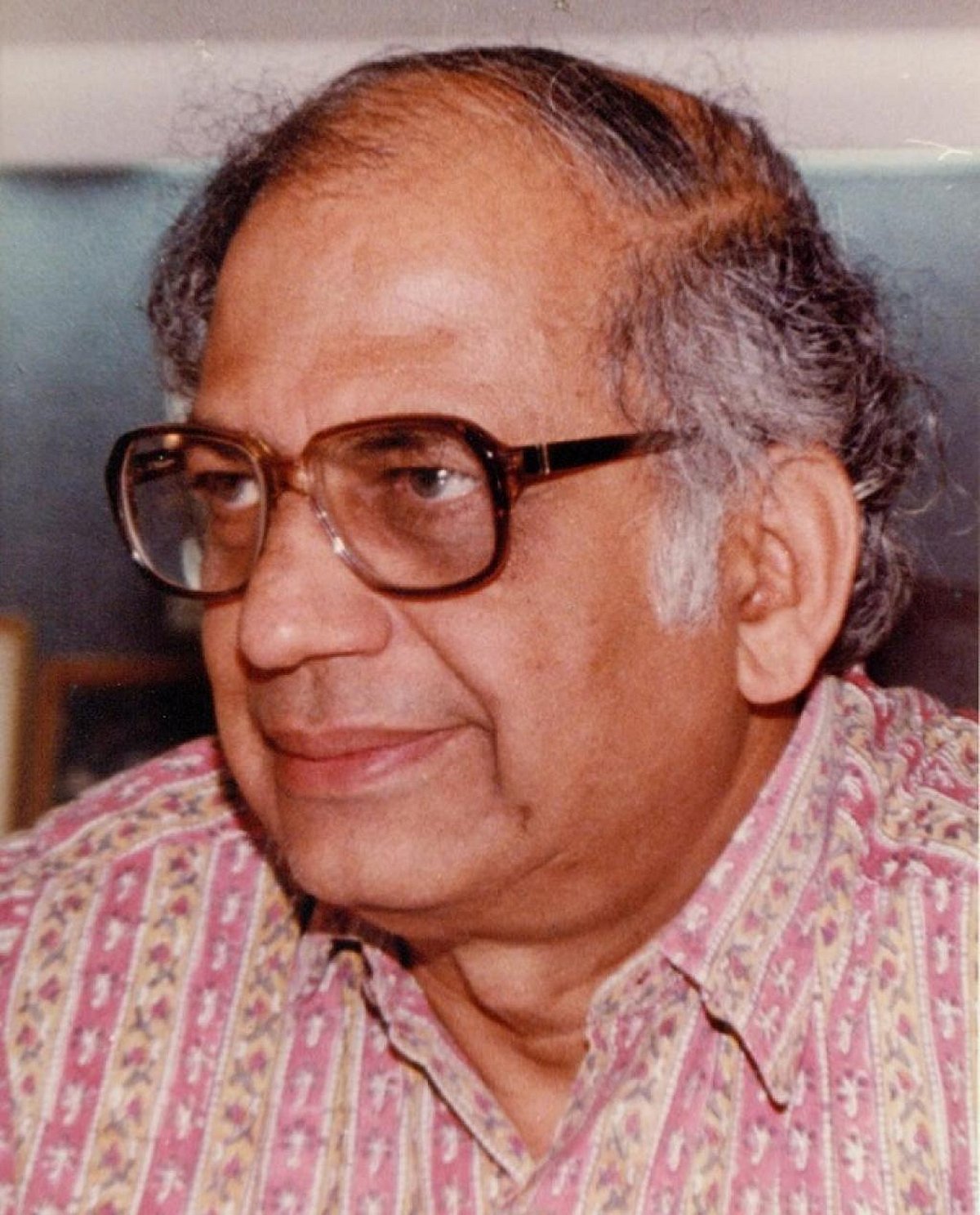
Life and legacy of Dr. Pushpa Mittra Bhargava (PMBB), the renowned scientist who founded the Centre for Cellular and Molecular Biology (CCMB). This is based on narration of a person who worked closely with him for decades, explains her motivation for writing his biography, highlighting his role in shaping modern biology in India while managing vast archival materials and personal diaries.
Dr. Bhargava possessed an extraordinary international
network, maintaining friendships with some of the world's most illustrious
scientists. He knew 25 Nobel laureates, about half of whom he had built
close associations with long before they received their Nobel prizes. His
circle included giants of modern biology like Francis Crick, James Watson,
Sydney Brenner, and César Milstein.
He actively leveraged these global connections to bypass
bureaucratic sluggishness and address major national crises in India:
- The
Bhopal Gas Tragedy (1984): When the disaster struck, India lacked
modern communication infrastructure—there was no internet, no fax
machines, and making standard long-distance (STD) calls was incredibly
difficult. To figure out what the gas actually was and how to deactivate
the highly toxic Methyl Isocyanate (MIC), Dr. Bhargava immediately wrote
to his contacts across the world. When a roll of garbled text messages
containing crucial data arrived, he had his assistant rush directly to the
airport, run past security into the control tower, and hand-deliver the
technical sheets to Dr. S. Varadarajan (the Director General of CSIR), who
was on a plane bound for Bhopal.
- Advocating
for the Injectable Polio Vaccine (IPV): Dr. Bhargava knew Dr. Jonas
Salk, the developer of the injectable polio vaccine, extremely well.
Drawing on this relationship and international scientific insights, Dr.
Bhargava relentlessly lobbied Prime Minister Rajiv Gandhi and Telecom
Commission chief Sam Pitroda to introduce IPV in India. He argued that the
Oral Polio Vaccine (OPV) was failing Indian children due to widespread gut
infections and poor absorption, though global double standards and vendor
interests ultimately kept India reliant on oral drops.
- Developing
India's First Genetically Engineered Vaccine: When entrepreneur
Varaprasad Reddy came to CCMB wanting to develop a cheap Hepatitis B
vaccine but lacking biological expertise, Dr. Bhargava took him seriously.
He connected Reddy with his student, Dr. Kesan Prasad, who had been
trained in France. Leveraging this international scientific training, Dr.
Prasad successfully developed India's first genetically engineered vaccine
in just a few years, bringing the price down from a staggering 800 rupees
a vial to just 40 rupees.
The story of how DNA fingerprinting was pioneered in India
is a classic testament to Dr. Bhargava’s fierce advocacy for basic science.
He firmly believed that while applied research is important, a nation cannot
hope to have scientists at the cutting edge without a strong foundation in
basic science. At CCMB, he deliberately created an environment focused on
asking fundamental questions to understand unexplained natural phenomena.
It was under this philosophy that Dr. Lalji Singh was
brought to CCMB to study a purely basic question: how does sex determination
happen in animals? Dr. Singh was specifically investigating how
environmental factors, like the incubation temperature of crocodile eggs,
determine whether the offspring become male or female.
While conducting this research, Dr. Singh used a specific
probe and noticed a highly unusual genetic pattern. When he brought his draft
paper to Dr. Bhargava, the director agreed to send it to a scientific journal
along with a formal cover letter.
However, Dr. Bhargava saw a massive practical implication in
the data that Dr. Singh had not yet fully focused on. In his cover letter to
the journal's editor, Dr. Bhargava explicitly wrote that inherent in this
basic finding was a potential pathway to develop DNA fingerprinting.
Reading Dr. Bhargava's cover letter proved to be a lightbulb
moment for Dr. Singh. Inspired by this insight, he went back to the laboratory,
worked intensely for the next few months, and successfully created a probe
tailored for a brand-new DNA fingerprinting technique.
Thanks to this pursuit of basic curiosity, CCMB developed the
second DNA fingerprinting system in the entire world. The only other
existing technique had been developed by Alec Jeffreys in the UK, which was
completely unavailable to India. This breakthrough gave India its own
independent, highly advanced forensic capability that would go on to
permanently change the country's legal and scientific landscape.
Dr. Bhargava’s activism and refusal to back down from a
fight extended far beyond the scientific laboratory. He consistently stepped
into the public arena to challenge what he saw as political, social, and
ethical failures:
- Calling
on the Public to "Loot" Food Hoarders (1973): During a
severe oil shortage and price-hiking crisis, traders began hoarding
essential commodities. In a fiery public speech, Dr. Bhargava voiced the
public's rage, declaring that when laws cease to protect public interest,
they are no longer sacrosanct. He boldly told the crowd: "You know
who the hoarders are. Go get the food. Go and get the food." This
open call to loot hoarders almost cost him his job as a government lab
director. He was only saved because friendly journalists, wanting to
protect him, attributed the speech in the newspapers to an Osmania
University professor who was not bound by the same strict civil service
rules.
- Returning
his Padma Bhushan in Protest: In his final years, Dr. Bhargava became
deeply distressed by what he saw as the rise of irrationality, the
lynching of citizens, and the systematic erosion of democratic norms and
secularism in India. Believing that "democracy depends on dissent,
reasoned dissent, and science cannot exist without it," he
decided to return his highly prized Padma Bhushan award. At the time, he
was wheelchair-bound with Parkinson's and undergoing dialysis, but he
stated that returning the award was the only powerful way he had left to
take a stand.
- Demanding
the Closure of the Indian Science Congress: Dr. Bhargava was outraged
when the Indian Science Congress began providing a platform to right-wing
ideologues to make unscientific, pseudoscientific claims—such as asserting
that ancient Indians had mastered cloning, interplanetary travel, and that
Lord Ganesh was proof of ancient plastic surgery (rhinoplasty). While
other scientists in the country remained silent, an incredibly ill Dr.
Bhargava invited thirty journalists with cameras into his sickroom. He
fiercely criticized the state of Indian science and publicly demanded that
the Science Congress be shut down entirely.
- Targeting
Private Hospital Ethics and "Opaque Billing": Through his
Hyderabad-based citizen initiative, MARCH, he took a direct swing at the
powerful medical establishment. He vocally campaigned against the
unethical practices of private hospitals, including kickbacks for
diagnostics and highly opaque billing systems. He also publicly mocked the
lack of diagnostic laboratory standards, pointing out the absurdity that
while a barber needed a formal license to cut hair, anyone in India could
paint a sign, open a diagnostic lab, and print completely unverified,
highly inconsistent medical reports.
- Exposing
"Favours Done, Favours Returned" in Public Health: He led a
relentless campaign against the government's decision to stick with the
Oral Polio Vaccine (OPV) over the Injectable Polio Vaccine (IPV). He
argued that poor gut health and sanitation in India meant children were
not absorbing the oral drops, leaving them effectively unvaccinated. He
accused the World Health Organisation (WHO) of maintaining a double
standard by pushing OPV on developing nations to clear out global
manufacturing surpluses while wealthy nations used IPV. He openly chalked
the Indian bureaucracy's compliance up to corruption, describing it as a
classic case of "favours done, favours returned" between
decision-makers and commercial vaccine vendors.
Dr. Bhargava’s deep convictions about diversity were
anchored in a fundamental biological maxim that he frequently invoked: "Variety
leads to evolution. Homogeneity leads to extinction."
To him, this was not just a rule of genetics to be studied
in a laboratory, but a foundational truth that governed healthy human
societies. He applied this scientific worldview directly to his vision for
India:
- India's
Strength in Heterogeneity: He firmly believed that India's true
strength and resilience lay in its vast, beautiful variety—specifically
its diversity in religion, climate, food, language, biodiversity, customs,
and dress.
- The
Biological Danger of Uniformity: He warned that any movement
attempting to push the nation toward homogeneity (such as "one
religion, one culture, one people") was not only politically
dangerous but ran completely counter to biological principles. In
nature, a lack of diversity makes a species fragile and leads to
extinction; in society, flattening variety leads to intellectual and
cultural decay.
- Dissent
as an Evolutionary Necessity: In his final, reflective years, Dr.
Bhargava grew deeply worried about the rise of an anti-intellectual
climate and the steady erosion of secular and democratic norms. He
passionately argued that democracy depends on dissent and reasoned
debate, and science simply cannot exist without it. Just as evolution
requires biological variance to progress, a society requires intellectual
variance and questioning to survive.
For Dr. Bhargava, defending a pluralistic, secular, and
democratic India was not just a political stance—it was a scientific duty,
because attempting to force homogeneity on a heterogeneous society was a
biological path to extinction
Comments
Post a Comment